
SECURING THE PHYSICAL PRODUCT BEHIND THE DPP
DIGITAL PRODUCT PASSPORT SECURITY: SECURE THE PHYSICAL PRODUCT BEHIND THE DIGITAL RECORD
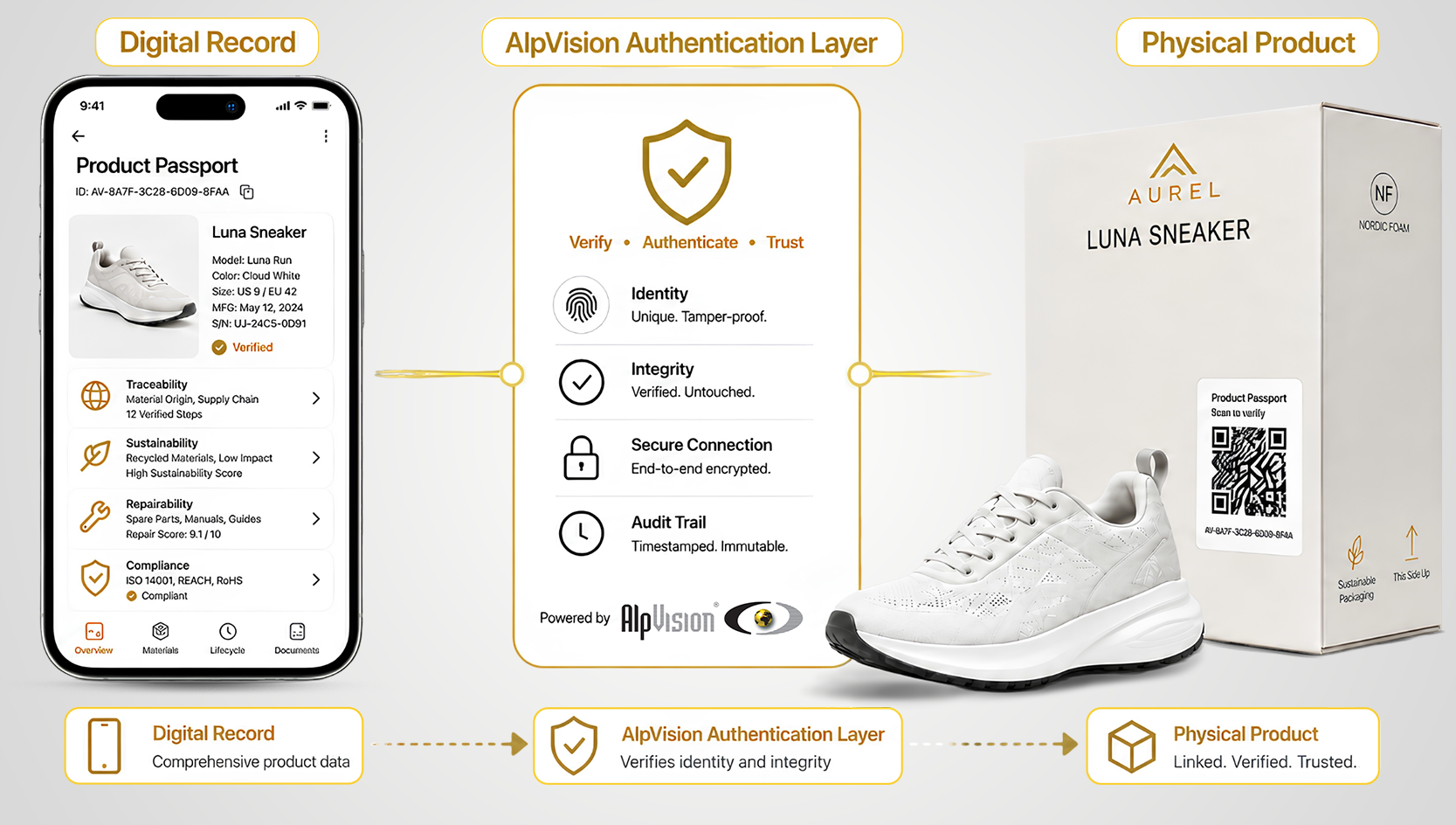
Digital Product Passport security protects the connection between a product’s digital record and the physical item it represents. A Digital Product Passport can provide valuable product data about traceability, materials, sustainability, compliance, repairability, lifecycle, and product identity, but it does not automatically prove that the physical product is genuine. A copied QR code, replaced label, or counterfeit product can still point to legitimate passport content.
AlpVision helps address this gap by adding covert, smartphone-verifiable authentication to the physical product, packaging, label, QR code, or data carrier linked to the DPP. This helps brands connect digital product information to the authentic physical item while keeping their existing DPP platform, website, app, traceability system, or data-management infrastructure in place.
THE MISSING LINK IN A DIGITAL PRODUCT PASSPORT
Digital Product Passports are designed to improve access to trusted product information throughout the value chain. But transparency in the digital record does not necessarily establish authenticity in the physical world.
If a legitimate QR code is copied, a label is replaced, or a counterfeit product is linked to a genuine passport, consumers and supply-chain partners may still access valid information for the wrong physical item.
AlpVision adds an authentication layer between the digital record and the physical product. By securing the QR code, label, packaging, certificate, or product itself, brands can strengthen the connection between DPP data and the genuine item across consumer, supplier, manufacturing, resale, repair, recycling, customs, and enforcement workflows.
WHAT ALPVISION SECURES
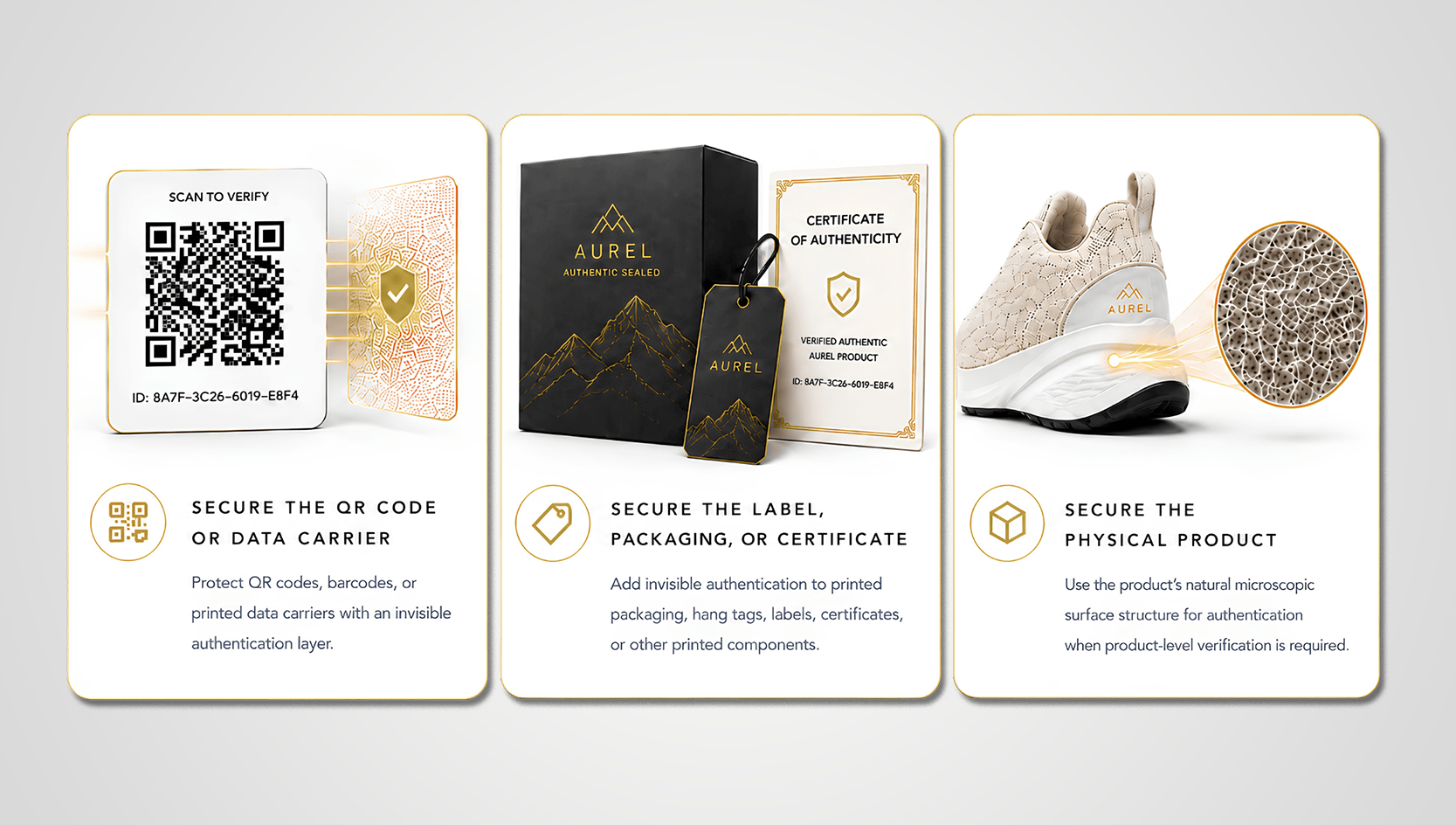
AlpVision adds covert, smartphone-verifiable authentication to the physical elements connected to a Digital Product Passport.
Depending on the product, materials, risk profile, and security requirements, authentication can be applied to the QR code or data carrier, printed label or packaging, certificate, or the physical product itself. Brands can protect the point that matters most without changing the visible design or replacing their existing DPP infrastructure.
Whether the concern is copied codes, replaced labels, counterfeit products, or product-level verification, AlpVision technology helps connect trusted digital product data to a genuine physical item.
HOW ALPVISION INTEGRATES WITH EXISTING DPP SYSTEMS
Every brand’s Digital Product Passport architecture will be different. AlpVision is designed to support existing DPPs rather than replace the systems used to create, manage, or deliver product information.
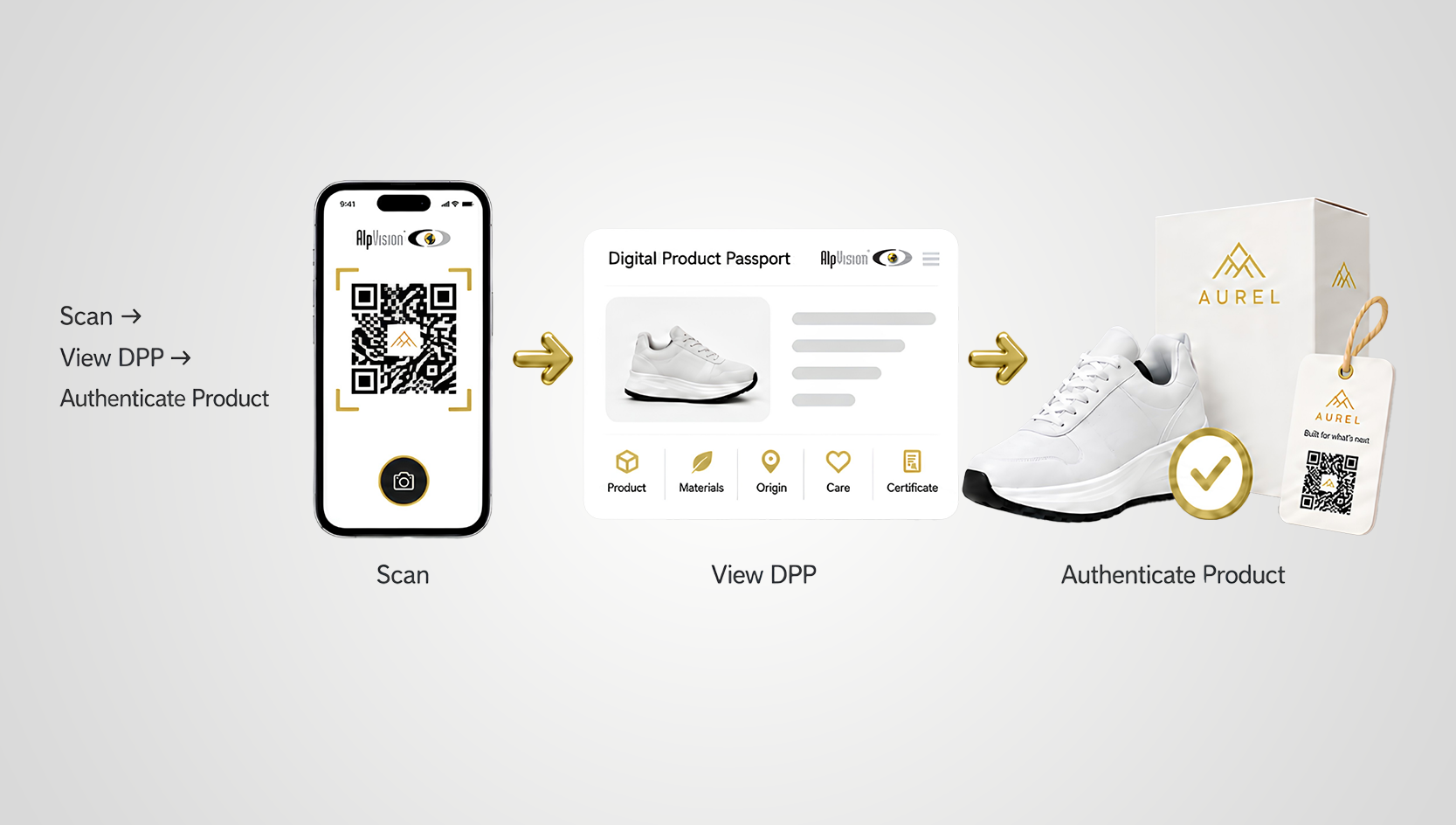
Authentication can be integrated into a brand website, mobile app, App Clip, browser-based flow, or WeChat experience in China. Authentication events can also support supply-chain monitoring, internal teams, consumers, resale, repair, recycling, customs, and brand-protection workflows.
This flexibility allows AlpVision to work alongside existing traceability, product data management, ERP, MES, regulatory, and consumer-facing systems while adding verification of the physical product.
As European Digital Product Passport requirements develop across product groups, including batteries and categories addressed through frameworks such as the ESPR, brands will need to manage increasing amounts of product, materials, sustainability, and compliance data. AlpVision adds a physical authentication layer without changing the underlying DPP platform or regulatory content.

WHY DIGITAL PRODUCT SECURITY MATTERS
Digital Product Passports can increase transparency across the product lifecycle by making information about materials, sourcing, sustainability, compliance, repairability, and environmental impact easier to access. Digital Product Passport security helps ensure that this information remains connected to the correct physical product.
For compliance and regulatory workflows, authentication can help connect product information to the genuine item. For brand protection, it can support the identification of counterfeit, diverted, or suspicious products. For consumers, it can add confidence when accessing product passport information. For supply-chain and supplier workflows, authentication provides an additional way to verify the physical item associated with the digital record.
This becomes increasingly important as product passports support sustainable and circular-economy goals such as repair, reuse, resale, and recycling. The result is a DPP strategy that combines transparency, traceability, security, and trust without changing the visible product design.
EXPLORE THE FULL DIGITAL PRODUCT PASSPORT SECURITY SOLUTION
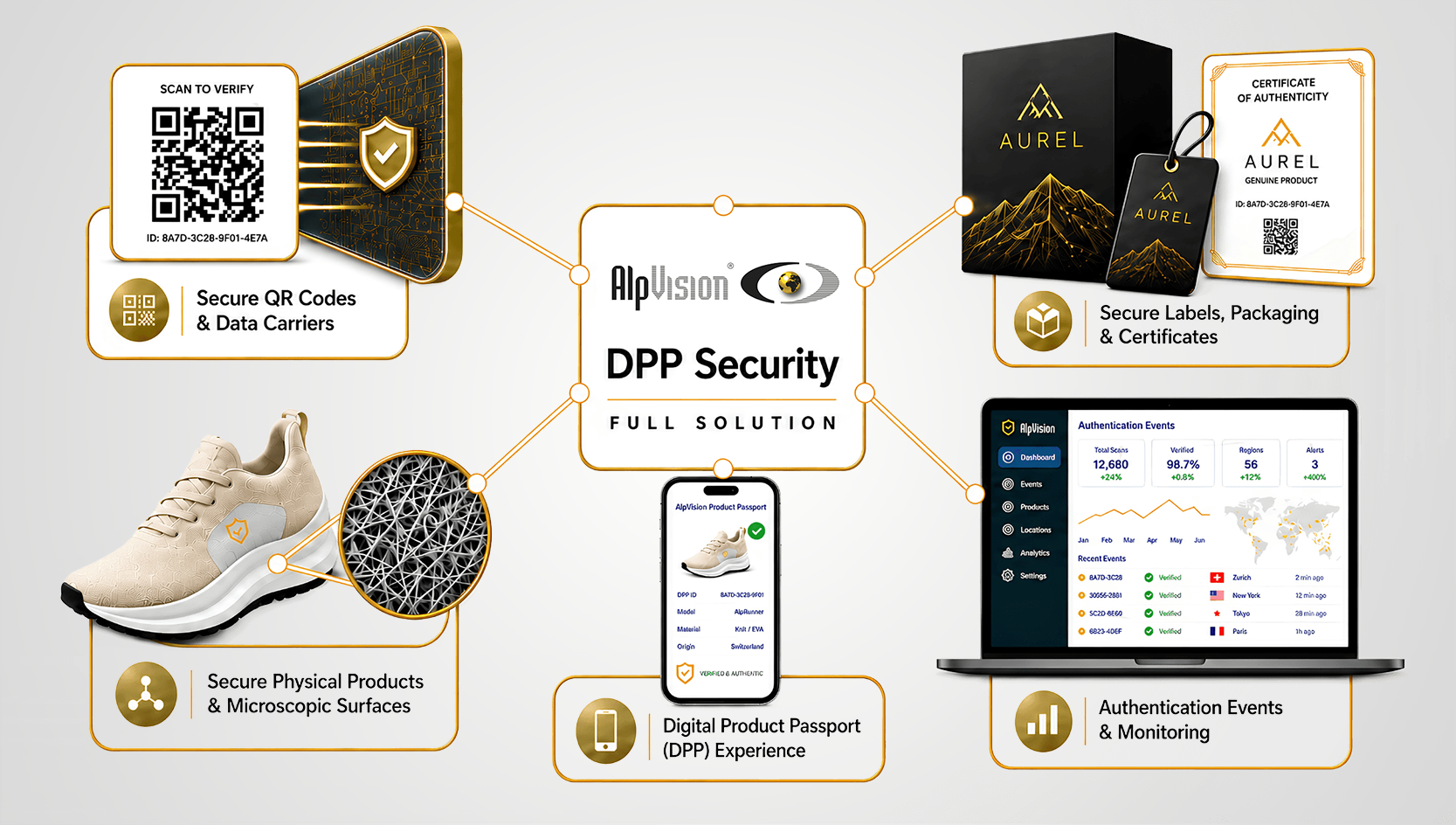
Learn how AlpVision technologies can secure the QR code, data carrier, label, packaging, certificate, physical product, or authentication events connected to your DPP strategy.
Explore our full Digital Product Passport security deep dive to understand the available protection options and how they can support your product, packaging, user experience, supply chain, and existing digital infrastructure.
You can also contact us directly to discuss your DPP requirements and determine where physical authentication could add value.
Explore DPP Security Options
FREQUENTLY ASKED QUESTIONS
WHAT IS DIGITAL PRODUCT PASSPORT SECURITY?
Digital Product Passport security protects the connection between a product’s digital record and the physical item it represents. A DPP may contain data about traceability, materials, sustainability, compliance, repairability, lifecycle, and product identity, but additional authentication can help verify that the physical product, packaging, label, or data carrier linked to that information is genuine.
DOES A DIGITAL PRODUCT PASSPORT PROVE THAT A PRODUCT IS AUTHENTIC?
Not automatically. A Digital Product Passport can provide trusted product information, but a copied QR code, replaced label, or counterfeit product could still point to a legitimate digital record. Physical authentication helps brands verify that the item connected to the passport is genuine.
HOW DOES DIGITAL PRODUCT PASSPORT SECURITY SUPPORT EUROPEAN REGULATORY REQUIREMENTS?
European Digital Product Passport initiatives, including requirements developing under the ESPR and product-specific regulation, are intended to improve access to product data across the lifecycle. Authentication complements these systems by helping verify the physical item associated with that information. AlpVision does not replace the DPP platform or regulatory content; it adds a physical security layer around the connection to the product.
HOW CAN A DIGITAL PRODUCT PASSPORT BE PROTECTED FROM COUNTERFEIT PRODUCTS?
Brands can add authentication to the physical elements connected to the DPP. Depending on the application, this may include the QR code or data carrier, printed label, packaging, certificate, or physical product itself. This can help reduce the risk that copied or substituted elements are used to access legitimate passport data.
CAN ALPVISION SECURE A QR CODE USED FOR A DIGITAL PRODUCT PASSPORT?
Yes. AlpVision can add covert, smartphone-verifiable authentication to QR codes and other printed data carriers used to access a DPP. This allows brands to add security without changing the visible design or replacing their existing Digital Product Passport infrastructure.
CAN ALPVISION INTEGRATE WITH AN EXISTING DIGITAL PRODUCT PASSPORT PLATFORM?
Yes. AlpVision is designed to add a physical authentication layer around an existing DPP architecture rather than replace it. Authentication can be integrated into brand websites, mobile apps, browser-based flows, App Clips, WeChat experiences, and other systems used to manage or access Digital Product Passport information.
WHAT PARTS OF A DIGITAL PRODUCT PASSPORT CAN ALPVISION HELP SECURE?
Depending on the product and risk profile, AlpVision can secure the QR code or data carrier, printed label, packaging, certificate, or physical product itself. Authentication can also support consumers, internal teams, supplier and supply-chain monitoring, resale, repair, recycling, customs, and brand-protection workflows.
HOW CAN DPP SECURITY SUPPORT TRACEABILITY, SUSTAINABILITY, AND CIRCULAR WORKFLOWS?
Digital Product Passports can make information about a product’s materials, origin, environmental impact, repairability, and lifecycle easier to access. Authentication helps connect that digital information to the genuine physical item, supporting greater trust in traceability, resale, repair, recycling, and other sustainable or circular product workflows.
HOW CAN WE HELP YOU?
We would be glad to send you more information.