
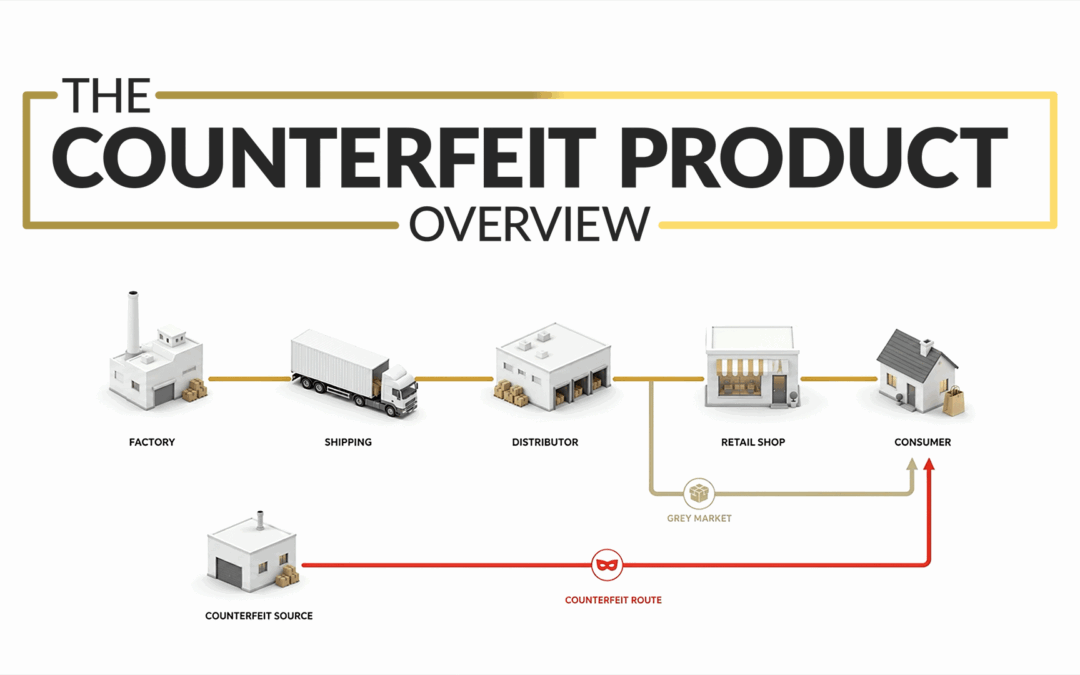
Counterfeit products have moved far beyond cheap knockoffs. They now closely replicate packaging, branding, and even product performance, making them difficult to detect across industries, from consumer goods and electronics to pharmaceuticals and automotive parts. If fake products can look and feel this real, how can you tell the difference?
For brands, this is more than just a revenue issue. Counterfeit products disrupt supply chains, damage customer trust, create legal risks, and in many cases, cause serious safety concerns.
This article breaks down where counterfeit products appear, why they continue to grow, the risks they create, and what you can actually do to prevent them.
What Are Counterfeit Products?
Counterfeit products are fake goods made to look like genuine branded items so they can deceive consumers. They copy trademarks, packaging, and design to pass as authentic, making them illegal.
You’ll see counterfeit products across industries like apparel, electronics, and pharmaceuticals. They are often cheaper, but they carry risks like poor quality, safety issues, and no accountability.
Counterfeit Consumer Goods vs. Grey Market Products: Are They Different?
Yes, counterfeit consumer goods and grey market products are different. Counterfeit consumer goods are fake products made to copy a brand and mislead buyers. On the other hand, grey market products are genuine goods sold outside the brand’s authorized distribution channels.
| Aspect | Counterfeit Consumer Goods | Grey Market Products |
| Definition | Fake goods made to imitate branded products | Genuine goods sold outside authorized distribution |
| Authenticity | Not authentic | Fully authentic |
| Intent | To deceive buyers into thinking the product is original | To resell genuine goods through alternative channels |
| Legal status | Illegal (trademark infringement) | Varies by country and regulations |
| Quality and safety | Often poor quality and have safety risks | Same product quality, but may not meet local standards |
| Warranty and support | No warranty or after-sales support | Limited or no official warranty |
| Impact on brands | Revenue loss, brand damage, and consumer trust issues | Pricing disruption and channel conflict |
| Examples | Fake handbags, fake cosmetics, fake electronics | Imported genuine phones and perfumes sold by unofficial sellers |
Types of Counterfeit Products (Examples by Industry)
Counterfeit products exist across almost every industry. They range from everyday consumer goods to high-risk items that directly impact health and safety:
1. Consumer Goods
Consumer goods are among the most commonly counterfeited products due to strong brand recognition and consistent demand.
Examples: Counterfeit consumer goods are widely available and frequently copied at scale, including:
- Apparel, footwear, and handbags that imitate popular brands
- Watches, sunglasses, and fashion accessories with replicated logos
Why are consumer goods counterfeited?
Counterfeiters target this category because it is easy to produce and sell.
- High demand for branded items at lower prices
- Simple designs that can be replicated quickly and cheaply
Risks of using counterfeit consumer goods
While these products may look convincing, they fail in quality and durability, causing:
- Short product lifespan due to poor materials and craftsmanship
- Erosion of brand trust and negative customer experience
Why are counterfeit consumer goods hard to detect?
Many counterfeit consumer goods are designed to pass visual inspection. They are hard to detect because the packaging, logos, and labels closely resemble genuine products. And consumers often rely only on appearance without verification.
2. Electronics
Electronics are a high-risk category of counterfeit products where functional devices and components are replicated to imitate genuine branded goods.
Examples: Counterfeit electronic products are commonly found across online and informal sales channels:
- Chargers, batteries, and power banks that mimic original brands
- Headphones and small electronic devices with copied branding
Why are electronic products counterfeited?
This category offers strong margins and repeat purchase behavior. They have:
- High-volume demand for low-cost accessories
- Relatively low manufacturing costs compared to retail pricing
Risks of using counterfeit electronics
Counterfeit electronics have serious safety hazards, such as:
- Overheating, short-circuiting, and fire risks
- Potential damage to connected devices and user safety
Why are counterfeit electronics hard to detect?
Counterfeit electronics are hard to detect because internal components can’t be verified without testing. And counterfeiters closely replicate packaging and branding.
3. Pharmaceuticals and Medical Equipment
Pharmaceuticals and medical equipment are high-risk categories of counterfeit products where life-critical items are falsified to imitate genuine, regulated products.
Examples: Counterfeit pharmaceutical products include:
- Prescription medications with incorrect or missing ingredients
- Over-the-counter drugs sold through unauthorized sources
- Falsified medical devices such as diagnostic kits, surgical tools, and protective equipment
Why are pharmaceutical products counterfeited?
Counterfeiters target this category due to urgency, trust, and high margins.
- Constant demand for essential healthcare products
- Limited ability for consumers to verify authenticity
Risks of using counterfeit pharmaceutical items
This is one of the most dangerous forms of counterfeiting. According to a study published in the National Library of Medicine, counterfeit medicines contain incorrect dosages or harmful substances, leading to serious health consequences.
Why are counterfeit pharmaceutical goods hard to detect?
Detecting counterfeit pharma products often requires lab testing or specialized authentication technologies, which aren’t available easily to the end consumer.
4. Cosmetics and Personal Care
Cosmetics and personal care products are a highly targeted category of counterfeit goods, where branded beauty and hygiene items are replicated to appear authentic.
Examples: Counterfeit cosmetics and personal care products include:
- Counterfeit perfumes, skincare, and makeup products
- Haircare and personal hygiene items with copied branding
Why are cosmetics and personal care items counterfeited?
Brand value, trends, and repeat purchases drive this category with:
- High consumer demand for premium and luxury beauty brands
- Strong visual branding that is easy to replicate
Risks of using counterfeit cosmetics and personal care items
Counterfeit cosmetics directly expose users to harmful and unregulated substances and cause:
- Skin irritation or allergic reactions because of the use of toxic ingredients
- Potential long-term health risks due to unsafe formulations
Why are counterfeit cosmetics and personal care goods hard to detect?
Counterfeit cosmetics often use high-quality packaging that closely matches the original brand’s design and labeling. The actual product differences, such as ingredient quality or formulation, are not visible to consumers and only become apparent after use.
5. Automotive Parts
Counterfeit automotive parts are fake components sold as genuine replacements for vehicles.
Examples: Automotive parts are often distributed through unauthorized suppliers, including:
- Fake bearings, brake pads, airbags, and filters
- Engine and electrical components
Why are automotive parts counterfeited?
The replacement parts market creates consistent demand.
- High demand for affordable spare parts
- Buyers often prioritize cost over authenticity
Risks of using counterfeit automotive parts
Counterfeit automotive products directly impact vehicle safety, causing:
- Mechanical failure leading to accidents
- Reduced performance and reliability
Why are counterfeit automotive parts hard to detect?
Counterfeit automotive parts are manufactured to closely match the size, shape, and markings of genuine components, making visual identification difficult. The performance differences typically only appear during use, testing, or failure under real driving conditions.
6. Alcoholic Beverages
Counterfeit spirits and alcoholic beverages are a high-risk category of counterfeit products where branded spirits, wines, and liquors are falsified or refilled to appear genuine.
Examples: These products are commonly found in both informal and sometimes legitimate-looking retail environments, including:
- Premium whisky, vodka, and rum bottles refilled with low-quality alcohol
- Counterfeit wine labels and packaging imitating well-known brands
Why are alcoholic beverages counterfeited?
This category is highly attractive due to brand perception and pricing gaps.
- Strong demand for premium and luxury alcohol brands
- High profit margins from refilling or relabeling low-cost alcohol
Risks of consuming counterfeit alcoholic beverages
Counterfeit alcoholic beverages have serious health and financial risks:
- Presence of toxic substances, leading to cases like methanol poisoning, according to published research
- Misleading quality, taste, and potential long-term health effects
Why are counterfeit alcoholic beverages hard to detect?
Counterfeit alcohol often uses genuine bottles, labels, and closures, making visual identification extremely difficult. In many cases, refillable closures in spirits allow bottles to be reused and refilled without obvious signs, while the liquid itself cannot be verified without testing or authentication methods.
Learn more about wine and spirits anti-counterfeiting solutions.
Other Industries
Counterfeiting extends beyond common consumer categories and includes:
- Precious metals and jewelry: Gold, silver, and gemstones may be diluted, plated, or falsely certified to appear authentic
- Banknotes and currency: Fake cash designed to mimic real currency, impacting financial systems and trust
- Tobacco products: Counterfeit cigarettes and related products sold outside regulated supply chains
- Industrial and chemical products: Lubricants, coatings, and raw materials with altered composition
The Economic Impact of Counterfeit Products
The counterfeit products market is a multi-billion-dollar global issue that affects far more than just brand revenues. They distort international trade, reduce government tax income, and create unfair competition across industries. Over time, this weakens economic growth, discourages innovation, and allows the illicit trade to expand.
- Revenue loss for brands: Counterfeit goods take away legitimate sales, leading to billions in lost revenue and reduced market share. Brands also face additional costs for enforcement, legal action, and brand protection.
- Distortion of global trade: According to the OECD, counterfeit products account for an estimated 3% of global trade, undercutting legitimate businesses and disrupting fair competition across markets.
- Job losses and reduced innovation: Lower revenues limit investment in research and development, leading to fewer jobs and slower innovation across industries.
- Loss of tax revenue: Governments lose significant tax income from unregulated counterfeit sales, impacting public services and economic stability.
- Growth of illicit trade networks: Profits from counterfeit goods often fund organized crime and illegal trade, creating broader economic and regulatory challenges.
Read more: Counterfeit goods from China.
Health and Safety Risks of Counterfeit Products
Because counterfeit consumer goods bypass quality control, testing, and regulatory standards, they can contain harmful materials, fail during use, or deliver dangerous outcomes, especially in high-risk categories like pharmaceuticals, electronics, and automotive parts.
- Unsafe pharmaceuticals and medical products: Counterfeit drugs may contain incorrect, harmful, or no active ingredients, leading to treatment failure, worsening conditions, or life-threatening consequences.
- Toxic ingredients in cosmetics and personal care: Fake skincare, makeup, and hygiene products may include unregulated or hazardous chemicals that can cause skin damage, allergic reactions, or long-term health effects.
- Fire and electrical hazards in electronics: Counterfeit chargers, batteries, and devices can overheat, short-circuit, or catch fire due to poor-quality components and lack of safety testing.
- Failure of critical automotive parts: Counterfeit brake pads, airbags, and engine components can fail under normal conditions, increasing the risk of accidents and serious injury.
- Contamination in food and beverages: Fake alcohol and food products may be diluted, mislabeled, or produced in unsafe conditions, posing risks such as poisoning or exposure to harmful substances.
Legal Consequences of Counterfeit Goods
Counterfeit goods are illegal because they infringe on intellectual property rights such as trademarks and brand ownership. Governments and regulatory bodies impose strict penalties, but enforcement remains complex due to the global and often cross-border nature of counterfeiting.
- Penalties for manufacturers and sellers: Producing or selling counterfeit goods can result in heavy fines, criminal charges, and imprisonment, along with seizure and destruction of counterfeit products.
- Intellectual property violations: Counterfeiting directly infringes on trademarks and brand rights, allowing companies to pursue legal action against offenders across multiple jurisdictions.
- Liability risks for businesses: Distributors, retailers, or platforms involved, knowingly or unknowingly, may face legal exposure, financial penalties, and reputational damage.
- Cross-border enforcement challenges: Counterfeit goods often move through international supply chains, making enforcement difficult due to differing laws, jurisdictions, and regulatory standards.
- Ongoing enforcement and compliance costs: Brands must invest in legal action, monitoring, and enforcement strategies to protect their intellectual property and limit counterfeit activity.
How to Identify Counterfeit Products: Limitations of Traditional Methods
Identifying counterfeit products is becoming increasingly difficult as counterfeiters improve their ability to replicate packaging, labeling, and product design. Traditional identification methods are still widely used, but they often fall short against modern counterfeiting techniques. This is because:
- Visual inspection is no longer reliable: Counterfeit products are designed to closely match genuine items, making differences in packaging, logos, and labeling difficult to detect.
- Holograms and security labels can be copied: Once considered secure, many visible security features like microtext can now be replicated or imitated with high accuracy.
- QR codes and barcodes can be duplicated: Static codes can be copied and reused across multiple fake products, giving a false sense of authenticity.
- Serial numbers can be reused or cloned: Counterfeiters often duplicate legitimate serial numbers, making basic tracking ineffective.
- Consumers lack verification tools: Most buyers rely on appearance and price, with limited access to reliable authentication methods at the point of purchase.
Advanced Anti-Counterfeiting Technologies
As counterfeit products become more sophisticated, brands need stronger and more reliable ways to protect their products. Advanced anti-counterfeiting technologies go beyond visible features and enable secure, scalable product authentication across supply chains and markets.
- Digital product authentication: Products can be verified using smartphones or dedicated tools, allowing consumers, inspectors, and brands to confirm authenticity in real time.
- Invisible security features: Technologies embedded directly into packaging or products—without visible changes—make replication extremely difficult and harder for counterfeiters to detect.
- Anti-counterfeiting packaging: Packaging can include tamper-evident seals, secure inks, embedded markers, or serialized elements that help identify and prevent counterfeiting.
- Serialization and track-and-trace: Unique identifiers assigned to each product enable tracking across the supply chain, helping detect diversion, duplication, or unauthorized distribution.
- AI and data-based detection: Advanced systems analyze patterns, scanning data, and anomalies to identify counterfeit activity and supply chain risks at scale.
How AlpVision Protects Against Counterfeit Products
Advanced technologies improve counterfeit detection and security. However, brands face problems when deploying. You need solutions that are both highly secure and practical to implement at scale. AlpVision addresses this by offering invisible, easy-to-integrate technologies that enable reliable product authentication without adding complexity to packaging or operations, offering:
- AlpVision Cryptoglyph: A secure, invisible digital watermark embedded directly into printed packaging or labels during the printing process. It enables instant authentication using a standard smartphone camera, without requiring any special hardware.
- AlpVision Fingerprint: A patented technology that uses the natural microscopic randomness of materials to create a unique, unclonable identity for each product, without adding any physical features.
These solutions work because they are:
- Invisible and covert: AlpVision’s technologies are not visible and cannot be detected or reverse-engineered, making them significantly harder for counterfeiters to replicate.
- Easy to implement: These solutions have no impact on your existing design or production process.
- Scalable and proven: AlpVision protects billions of products globally, demonstrating reliability across industries and large-scale deployments.
The Future of Counterfeit Products and Brand Protection
Counterfeit products aren’t slowing down. They’re getting better: harder to spot, easier to distribute, and more convincing across industries.
This is why brand protection services are no longer enough. The shift is moving toward solutions that allow real-time verification, better visibility, and stronger security without relying on visible features alone. Looking ahead, brands are adopting technologies such as:
- Smartphone product authentication that allows products to be verified instantly using a smartphone
- Track-and-trace systems, providing visibility across the supply chain and helping detect diversion or duplication
- Invisible protection methods, which are harder for counterfeiters to identify and replicate
These approaches make it easier to authenticate products while making counterfeiting significantly more difficult to scale.
Contact AlpVision to see how you can fight against counterfeit products with solutions that are secure, scalable, and easy to implement.
Contact Us