
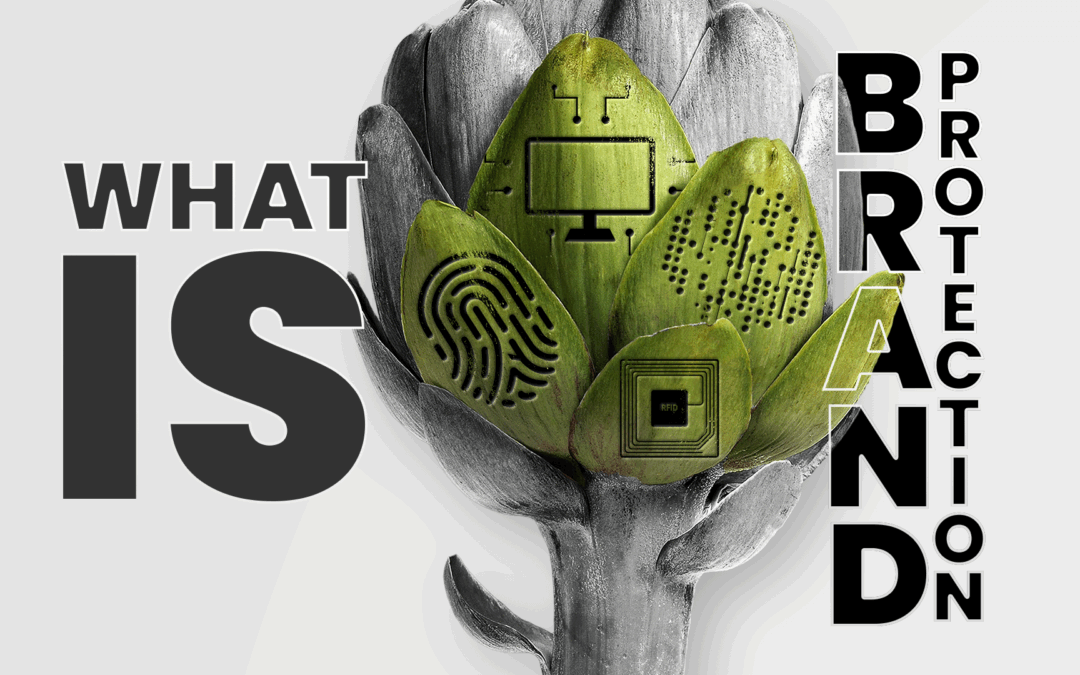
Brand protection is the set of measures and safeguards put in place to minimize damage from brand abuse. It includes strategies, technologies, and legal actions companies use to prevent counterfeit products, trademark infringement, online impersonation, and brand abuse. Brand protection combines intellectual property enforcement, digital monitoring, supply chain security, and authentication technologies to safeguard revenue and reputation.
The internet age is rife with malicious and opportunistic entities looking to benefit from the good name of established brands. Brand protection is a company’s sole weapon against the wide-ranging dangers of counterfeiting, IP theft, and impersonation.
We’ll describe the burning need for well-structured brand protection strategies. In addition, we’ll highlight the kinds of brand protection technology your business should implement to protect your brand without further delay.
Understanding Brand Protection – A Definition
Many brand owners assume brand protection begins and ends with trademark registration or occasional legal action. In reality, brand protection is an operational discipline that protects revenue, reputation, and customer trust across both physical and digital markets.
Brand protection now demands a lot more nuance and effort than in years past, when lawsuits and publicity were sufficient to suppress malicious agents. The degree to which brand abuse has diversified and evolved over time is appalling, and brand owners need to be aware of the potential risks it entails.
Why Is Brand Protection Important?
Brand protection is important because modern businesses face constant threats from counterfeiters, digital impersonators, and intellectual property abusers. It helps you:
- Prevent revenue loss caused by counterfeit goods, grey market diversion, and intellectual property theft.
- Protect brand reputation from low-quality fake products like counterfeit perfumes that erode customer trust.
- Provide consumer safety from counterfeit consumer goods, pharmaceuticals, medical devices, cosmetics, and electronics.
- Reduce legal and regulatory risk from trademark, patent, or copyright infringement.
- Defend against digital threats, including phishing websites, social media impersonation, and fraudulent online marketplaces.
- Preserve long-term brand equity with product authenticity and consistent customer experience.
- Enable secure global expansion by maintaining consistent protection across international markets.
Core Components of Brand Protection
Brand protection isn’t a single action or tool. It’s a structured combination of legal safeguards, monitoring systems, and enforcement measures that work together to prevent and respond to brand abuse. Most effective brand protection programs include the following core components:
1. Legal Protection and Intellectual Property Management
Securing trademarks, copyrights, patents, and design rights forms the foundation of brand protection. Ongoing IP portfolio management ensures these rights are actively monitored and enforced across jurisdictions.
2. Digital Monitoring and Online Enforcement
Brands must continuously monitor search engines, marketplaces, social media platforms, domain registrations, and paid advertisements to detect impersonation, phishing, and counterfeit listings. Rapid takedown and enforcement mechanisms minimize damage.
3. Product Authentication and Anti-Counterfeiting Technology
Physical and digital authentication solutions, such as covert anti-counterfeiting features, serialization, and forensic markers, help verify product authenticity and deter counterfeiters throughout the product lifecycle.
4. Supply Chain Integrity and Distribution Control
Monitoring distribution networks controls grey market diversion, unauthorized reselling, and internal leakage. In this step, secure track-and-trace systems also help with transparency and accountability across global supply chains.
5. Threat Intelligence and Data Analysis
Centralized brand monitoring systems collect and analyze brand abuse data in real time, so you prioritize risks, identify patterns, and respond proactively.
Types of Brand Abuse You Need Protection From
Brand abuse is not limited to fake products or copyright infringements. These are simply two of the many forms it can take in today’s digital business era. Bad actors often don’t need to manufacture physical products to piggyback on a brand’s reputation. They can simply impersonate the brand’s website and social media accounts or flout patent rules. Let’s look at the different types of brand abuse in detail.
1. Counterfeiting

A report by the OECD showed that the total value of counterfeit and pirated goods was estimated to reach $3 trillion in 2022. Counterfeiting relies on imitating the product packaging and brand name and passing it off as the real thing. It not only causes a revenue hit for the business but also damages the brand’s reputation.
2. Grey market
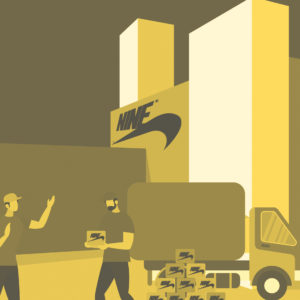
The grey market deals in original products but sold without the brand’s permission through unauthorized distribution channels. Often, these involve selling goods in other countries by exporting them illegally.
3. Intellectual Property theft

Malicious agents can also trade in services by using a brand’s copyright without permission. Digital goods like music, movies, video games, and more are often pirated and count as copyright piracy. IP theft can also occur if a brand’s name, registered trademarks, or original assets are used and distributed without permission.
4. Fake websites
There are many instances of fake websites, slightly modified domain names, and domain names of a brand’s trademarks. These rogue websites attempt to steal internet traffic from genuine websites to sell fake goods or profit from the users’ trust.
5. Social Media Impersonation
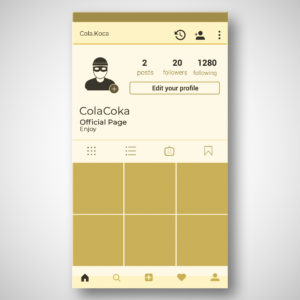
Brand abuse can also take the form of third parties hijacking genuine social media accounts or creating imitations to sell counterfeit products. Bad actors can also push malware or run phishing scams using the redirected traffic.
When Does Brand Abuse Occur?
Brand abuse can occur at any point where your brand name, products, intellectual property, or reputation are exposed to third parties. It’s not limited to counterfeit manufacturing. It can arise across digital platforms, physical markets, and even within distribution networks.
Brand abuse typically occurs when:
- Counterfeiters manufacture and distribute imitation products using your brand identity or packaging.
- Unauthorized sellers divert genuine products into grey markets or restricted regions.
- Third parties use your trademarks, logos, or copyrighted assets without permission.
- Fraudsters create fake websites or register lookalike domain names to mislead customers.
- Impersonators launch social media accounts or phishing campaigns under your brand name.
The Impact of Brand Abuse on Businesses and Consumers
Brand protection is a two-pronged approach: preserving the brand itself and preventing the end customers from abandoning their trust in the brand.
Impact on Businesses
The potential impact of brand abuse on brand owners is immense. Sale of counterfeit products, IP theft and patent theft, and online impersonation can cause huge financial and reputational losses for brand owners. Although it isn’t always easy to measure its impact, brand abuse is simply too big to ignore.
It’s important to note that quantifying the damage to your business reputation isn’t simple. Do you look for an increased number of complaints, or perhaps a higher number of returned items? Filing lawsuits may have deterred criminals before, but today, legal actions are minimally effective at best. Simply put, criminals are bolder and more sophisticated than ever before.
Impact on Consumers
On the other side, when customers buy inauthentic products, they don’t realize that they’ve been duped until something goes wrong. For instance, a consumer might believe they purchased a legitimate medical device. But after a short while, the fake device can malfunction and cause injury or even death.
Not only do consumers ultimately overpay for substandard quality, but they also stop trusting the brand and its products, leading to loss of revenue and trust for the brand.
What is Brand Protection Technology?
Brand protection technology is the tools and systems used to detect, verify, and prevent unauthorized use of a brand’s products, trademarks, and intellectual property. Unlike traditional legal enforcement alone, brand protection technology helps with faster identification of threats, stronger evidence collection, and more scalable prevention.
In practice, brand protection technology typically includes:
- Online monitoring platforms that scan marketplaces, search engines, domain registrations, and social media for counterfeit listings, impersonation, and trademark misuse.
- Product authentication solutions that allow brands to verify whether a product is genuine or counterfeit using covert or forensic security features.
- Serialization and track-and-trace systems that enable product-level visibility across the supply chain.
- Anti-counterfeit dashboards that centralize incident reporting, prioritize threats, and identify repeat offenders.
- Digital brand monitoring tools that track keyword abuse, fraudulent advertising, and domain spoofing.
Why Do You Need Brand Protection Technology?
Minimum safeguards like consumer awareness and lawsuits don’t deter brand abusers. In a digitally connected world, it’s easy for a criminal to shift operations to a country that may not be friendly to IP laws and law enforcement. You can identify the problem, but stopping someone sitting across the planet from making rogue websites is easier said than done.
Technology can help you vastly improve your brand protection efforts if implemented correctly. We, at AlpVision, believe that counterfeiters and cybercriminals shouldn’t be underestimated and should be tackled with innovative technological solutions for brands to stand a chance.
Counterfeiters are persistent and advanced con artists, so the brand protection system you deploy needs to account for those facts.
You need to use more advanced technology than what counterfeiters use to stay one step ahead of them. You can use tech to authenticate products as well as capture and analyze vital statistics in a centralized solution. This is what prompted us to develop AlpVision’s Brand Monitoring System (BMS).
How Does Brand Protection Work?
Brand protection operates as a continuous cycle of detection, verification, enforcement, and prevention. Here’s how it works:
- Threat identification: Monitoring systems, marketplace scans, domain tracking, distributor audits, or consumer reports surface potential infringements. This may include counterfeit listings, trademark misuse, unauthorized resellers, lookalike websites, or diverted inventory.
- Authentication: When a suspicious product or listing is identified, the next step is verification. This is where anti-counterfeit technology comes in. Covert security features, forensic markers, serialization, or product authentication tools confirm whether the item is genuine or counterfeit.
- Risk assessment and prioritization: Not every violation carries the same risk. Counterfeit pharmaceuticals or safety-sensitive products require immediate escalation. Lower-risk trademark misuse follow standard procedures.
- Enforcement and disruption: Once verified, action is taken. This may include marketplace takedown procedures, domain complaints, cease-and-desist notices, customs intervention, or legal proceedings. Strong authentication evidence improves takedown success rates and strengthens legal claims.
- Preventive reinforcement: After enforcement, you can reduce future risk by strengthening controls. Upgrade anti-counterfeit technologies, expand authentication measures, and refine serialization. The goal is to increase the operational difficulty and cost of counterfeiting.
Select the Right Brand Protection Solution with AlpVision
Global enterprises require global solutions that integrate into their current IT infrastructure. As such, AlpVision BMS is designed to be a server-based web application, allowing brand owners to monitor activity online, collect brand abuse statistics, and authenticate products when the system flags potential incidents. That’s how the system works at a high level, but AlpVision BMS provides additional brand protection safeguards as well.
Not only can our BMS solution help you identify counterfeit products, but it will also integrate seamlessly with our anti-counterfeiting solutions, such as AlpVision Fingerprint and Cryptoglyph. If you have a custom architecture, our brand monitoring software can also combine well with other tools, including secure QR codes, 2-D dot matrices, or something more covert.
AlpVision’s BMS process provides secure encryption and allows you to receive real-time information and notifications from any part of the world. With our online brand protection system, you can finally take control and minimize the damage to your IP and brand identity.
If you’d like to learn what type of brand protection is best suited for your brand, contact AlpVision today.
Contact Us
Frequently Asked Questions
How many types of brand protection services are there?
● IP portfolio management: All your intellectual property should ideally reside in one place for its effective protection and management. You can use asset management systems to organize your digital assets and even outsource IP protection to third parties.
● Threat monitoring and analysis: Depending on your industry, this can include monitoring for online and offline IP infringement, authentication of abuse, detecting counterfeiting products, and other measures.
● IP protection: Enforcing IP protection is an integral part of your brand protection strategy. But it’s often a cripplingly difficult task to undertake. Determining the actual culprits, the kind of infringement committed, and then pursuing legal action against abusers can be much more difficult than you’d imagine.
● Online monitoring: Your brand needs to constantly monitor online counterfeiters on all social media platforms. Online advertising is another avenue for brand abuse. Brands selling physical or digital products need to monitor all online advertisements that attempt to direct users to counterfeit products by duping them with imitations and copyright infringements. Knockoffs are yet another major source of concern for brand owners worldwide.
● Supply chain monitoring: Your supply chain is a major source of brand abuse as bad actors routinely redirect genuine products from within the supply chain to sell them in the grey market or for other nefarious purposes.
Is brand protection the same as trademark protection?
What is digital brand abuse?
industries face a higher risk due to product value, consumer demand, or safety implications. Industries most commonly affected include:
● Pharmaceuticals and medical devices
● Cosmetics and personal care
● Luxury goods and fashion, including footwear
● Electronics and consumer technology
● Food and beverage
● Spirits and tobacco ● Industrial components and machinery