
You invest in anti-counterfeit technologies, but how do you know if they actually work? Counterfeiting shifts fast across markets and channels, and without visibility into real-world authentication results, even strong protection can fail silently. Learn how an anti-counterfeit dashboard gives you visibility into authentication results.
Brands are trying their best to protect their products against counterfeiting by deploying features like QR codes, NFC, invisible markings, or tamper-evident features. Yet once products are in the market, many have no clear view of how these anti-counterfeiting features perform. Authentication happens, but results are rarely tracked, compared, or analyzed.
A dashboard anti-counterfeit approach closes this gap by connecting authentication data and highlighting anomalies. It shows what works, how often issues are appearing, and where you need to act, completing your brand protection strategy.
Why Tracking Anti-Counterfeit Results Is Critical
You deploy brand protection strategies to stop fakes in the market. But once products are in circulation, counterfeit activity is invisible unless authentication results are tracked. Without data, failed checks, suspicious patterns, and high-risk markets go unnoticed until enforcement or consumer harm forces a reaction. Here are three reasons why you need anti-counterfeit analytics:
1. Real-World Counterfeiting Is Dynamic
Counterfeiters adjust routes, channels, and techniques as soon as they catch on to your updated strategies. Tracking authentication results reveals:
- Sudden increases in failed authentications.
- New geographic concentrations of suspicious activity.
- Abnormal scan behavior that signals misuse or replication.
The visibility allows you to respond while exposure is still limited.
2. Brand Protection Decisions Require Data
Without tracking, you can’t tell which technologies, markets, or channels are effective. This results in making investment decisions based on assumptions rather than data and results. Anti-counterfeit analytics allow you to:
- Track KPIs across regions and products.
- Compare performance between authentication technologies.
- Identify where protection is weakening over time.
Measuring performance will help you run brand protection as a controlled process.
3. Authentication Performance Directly Affects Consumer Experience
Features like smartphone product authentication empower your end customers to identify their purchases, improving your brand image. You can further monitor these results to help you detect:
- Markets with low authentication success rates.
- Distributors or retailers linked to abnormal activity.
By monitoring brand protection data in real time, you ensure consumers can reliably verify genuine products and help maintain confidence across your distribution channels.
What an Anti-Counterfeit Dashboard Should Offer
If you track authentication results, the anti-counterfeit dashboard becomes the control point of your brand protection program. At a minimum, an effective anti-counterfeit dashboard should provide:
- Authentication success and failure rates to identify where checks break down.
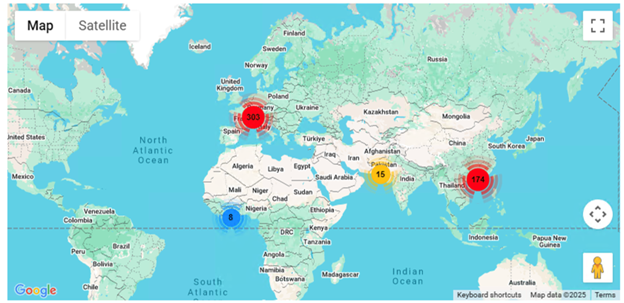
- Geographic heatmaps to expose high-risk regions and emerging hotspots.
- Time-based trends to see how risk evolves after product launches or enforcement actions.
- Alerts and anomaly detection to flag suspicious behavior early.
- Multi-technology integration to avoid blind spots across protection layers.
For example, here’s how AlpVision’s Brand Monitoring System (BMS) shows you the geographic heatmaps:
The Visibility Gap in Most Anti-Counterfeit Solutions
Most dashboards fall short because they only monitor their own technology. This creates:
- Data silos
- Incomplete visibility
- Fragmented reporting
If you deploy multiple authentication tools, as most brands do, you need a single dashboard that connects all data sources and shows the full picture, not isolated results.
The AlpVision BMS Dashboard: A Unified Anti-Counterfeit Control Layer
When brands use multiple authentication methods, visibility becomes fragmented and performance can’t be assessed in one place. This is the gap the AlpVision BMS dashboard is designed to close.
The AlpVision BMS dashboard gives you full visibility across your brand protection program. It does not replace your anti-counterfeit technologies. It connects your data sources, tracks their performance, and turns authentication activity into actionable insight through a single dashboard anti-counterfeit solution.
Built for Multi-Technology Brand Protection
The AlpVision BMS dashboard is able to monitor multiple authentication technologies at once. It natively tracks AlpVision technologies, including:
- Cryptoglyph, for invisible marking authentication.
- Fingerprint, for microstructure and surface analysis.
At the same time, it also allows you to monitor third-party technologies, such as:
- QR codes
- NFC and RFID
- Overt and covert markers
- Tamper-evident features
- Serialization and track-and-trace data
Seamless Integration with Brand Ecosystems
The AlpVision BMS dashboard fits into your existing brand environments. Its flexible architecture allows you to centralize authentication data without disrupting current systems. The platform:
- Accepts data from external authentication sources
- Supports API-based integration with internal brand systems
The integrations make it possible to connect brand protection data with operational and compliance processes.
From Raw Data to Actionable Intelligence
The AlpVision BMS dashboard is built for decision-making, not just data collection. It provides:
- Automated dashboards aligned with your brand protection services and priorities.
- Filters by market, product, channel, or technology.
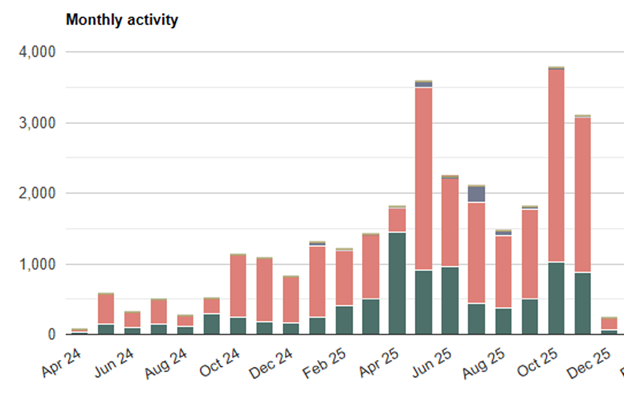
- Real-time statistics to track suspicious authentication patterns.
- KPIs formatted for management reporting and audits.
Instead of reviewing scattered results, you see clear signals that support faster, more effective action. Here’s how BMS provides you with easy-to-understand bars and charts for reporting:
How Brand Owners Benefit from a Unified Dashboard
Managing brand protection across multiple markets and authentication technologies is difficult when data is scattered. A unified dashboard centralizes authentication results so performance can be assessed, compared, and acted on consistently. The dashboard helps you with:
Simplified Global Visibility
A single interface displays authentication data from all markets and protection technologies. Brand protection teams can review activity worldwide without switching tools or consolidating separate reports.
Standardized dashboards ensure consistent reporting across regions and product lines. Performance can be compared accurately, even when different authentication methods are deployed in different markets.
Improved Decision Making
Authentication data highlights where protection underperforms and where risk concentrates. Brand owners can identify:
- Underperforming protection measures
- High-risk markets and sales channels
Clear performance indicators support more effective allocation of enforcement budgets. Data-backed insights also support evidence-based discussions with internal stakeholders, including compliance, legal, and management teams.
Continuous Improvement of Brand Protection
Dashboard insights enable ongoing refinement of protection programs. Brand owners can:
- Update packaging designs based on authentication performance.
- Improve retailer and inspector training where issues recur.
- Strengthen supply chain controls in vulnerable areas.
Measured feedback transforms anti-counterfeit efforts into an adaptive system that improves over time instead of remaining static.
Industry Use Cases: How a Dashboard Completes Anti-Counterfeit Strategies
Anti-counterfeit technologies generate the most value when authentication activity is tracked and analyzed. Here are examples of industries where a dashboard connects field data to operational action:
- Pharmaceuticals: Support field inspectors with real-time authentication feedback and highlight regions where failed checks increase, helping identify areas with elevated patient safety risk.
- Cosmetics and personal care: Detect suspicious clusters of authentication activity linked to specific e-commerce platforms, sellers, or regions, enabling earlier intervention.
- Luxury goods: Aggregate authentication results to map counterfeit hotspots across tourist locations and resale markets, supporting targeted enforcement.
- Automotive lubricants: Identify abnormal authentication patterns tied to dishonest resellers and unauthorized distribution, helping expose grey-market diversion.
- Industrial and B2B products: Monitor distributor-level authentication activity and flag compliance issues that threaten brand integrity and contractual control.
How to Implement an Anti-Counterfeit Dashboard: Steps for Brand Owners
Implementing an anti-counterfeit dashboard means connecting existing authentication technologies, consolidating their results, and defining how performance will be measured and acted on. The following steps outline how brand owners can move from scattered authentication data to structured monitoring.
- Audit existing authentication technologies: List all protection measures currently in use across products and markets, including overt, covert, digital, and physical features.
- Centralize all authentication data: Identify where authentication results are generated and stored. Consolidate data sources to avoid gaps and duplication.
- Connect data sources to the AlpVision BMS dashboard: Integrate internal and external authentication systems into a single dashboard environment using available interfaces and APIs.
- Configure KPIs and alerts: Define performance indicators, thresholds, and alert rules that reflect risk, compliance, and enforcement priorities.
- Train internal teams and begin monitoring: Ensure brand protection, quality, and enforcement teams understand how to interpret dashboard outputs and respond to anomalies.
Go Beyond Brand Protection Technology with AlpVision’s BMS
Anti-counterfeit technologies are necessary and the first step, but they aren’t sufficient on their own. Strong brand protection strategies combine:
- Effective anti-counterfeit technologies deployed at scale.
- Continuous tracking and analysis of authentication performance.
- Rapid response to anomalies before exposure grows.
The AlpVision BMS dashboard helps you connect authentication data across technologies and markets into a single operational view and detect risk earlier, prioritize action, and control your anti-counterfeit program.
Contact AlpVision to explore how the BMS dashboard brings visibility, control, and intelligence to your anti-counterfeit strategy.
Contact Us