
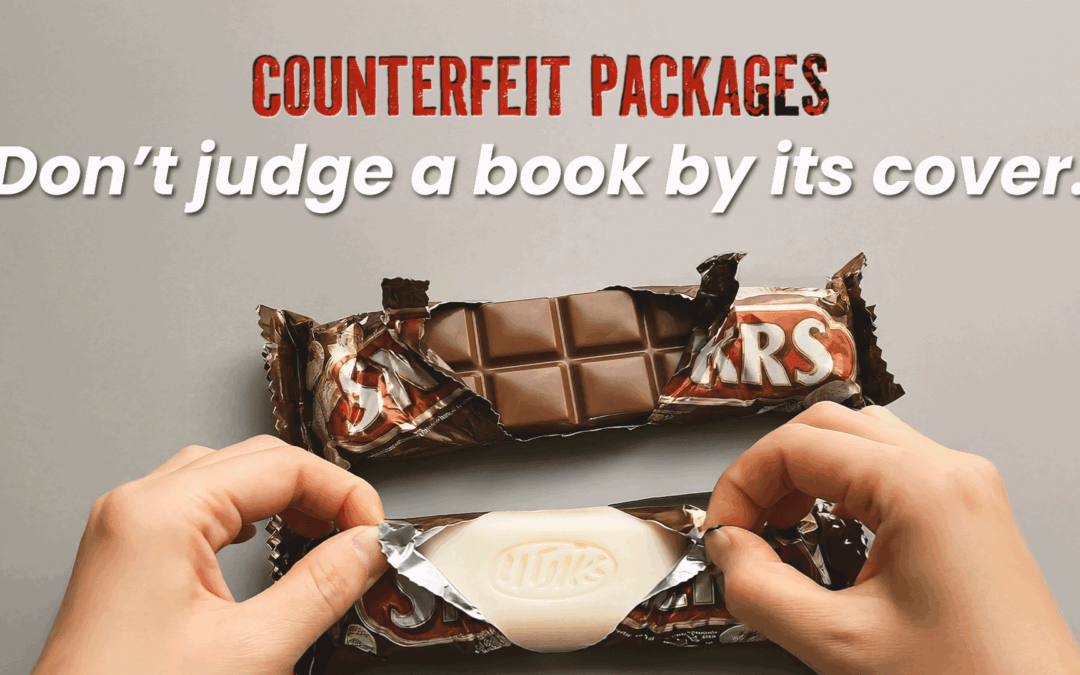
Anti-counterfeiting packaging is the first line of defense against counterfeiters. With invisible, smartphone-verifiable protection, brands can safeguard products, build trust, and stop counterfeit goods before they reach consumers.
Counterfeiting is a global business worth hundreds of billions of USD a year, distorting fair markets and damaging legitimate trade. For companies, it means lost revenue, damaged reputation, and — in industries like pharmaceuticals — real risks to human health. And it all starts with the pack.
In this article, you’ll learn how pack-level protection works, how it fits into existing printing processes, and what steps you can take to put it into practice.
Why packaging is the first line of defense against counterfeiters
Counterfeiters almost always start with the packaging. And it’s easy to see why. Boxes, cartons, and labels are easier to copy than the goods inside, and to the average buyer, packaging is the first signal of authenticity. If the outside of the product looks right, most people will assume the inside is genuine.
Because packaging in our global economy changes hands so many times before it reaches the market — printers, logistics hubs, distributors, and store shelves — it’s often easier for counterfeiters to intercept than the product itself.
For example, counterfeit pharmaceutical cartons have been found mixed into legitimate shipments in developing markets. The drugs inside were ineffective, but the outer box looked convincing enough to pass through customs and reach pharmacies.
Once fake packs are in circulation, it becomes the perfect disguise for fake goods — unless companies use strong, tamper-resistant packaging.
For businesses, counterfeit goods pose an existential threat. Weak protection is the biggest threat to your reputation, and even worse, to the industry at large. A customer buys what looks like your product but finds a fake inside the box. The consumer blames you, not the counterfeiter — and trust evaporates.
Thus, strong protection is the difference between stopping fakes early and letting them reach your customers.
Industrial printing processes that enable secure packaging
Packaging comes off the press in many ways, but counterfeit protection doesn’t have to depend on the printing method. Whether you’re producing cartons, labels, or flexible packs, all major printing processes can be secured through the proper technologies.
- Offset printing — Common for folding cartons and premium labels, offset is prized for its fine detail and consistent quality.
- Rotogravure printing — Essential for very high-volume runs, gravure dominates in tobacco, pharmaceutical, and other sectors needing billions of packs.
- Flexography printing — The backbone of flexible packaging, foils, and pressure-sensitive labels, flexo handles diverse substrates with ease. This versatility makes it indispensable not only for consumer goods but also for food packaging, where safety and freshness are critical.
- Digital printing — Growing fast for short runs, personalization, and on-demand packs, digital gives brands agility without compromising print quality. This growth highlights how flexible security features must be to keep pace.
What makes this powerful is that Cryptoglyph integrates into all these processes without production changes, ensuring secure packaging even in vulnerable markets. No special inks, no new substrates, no slowdown in output. Just invisible, smartphone-readable protection built directly into the artwork, at full industrial scale.
How Cryptoglyph works — invisible, smartphone-readable technology
Counterfeiters copy what they can see. Cryptoglyph works by hiding protection where they can’t. The technology adds a field of invisible micro-holes or micro-dots into the varnish or solid areas of the box. They can’t be spotted by eye, copied with a scanner, or removed without damaging the design.
For print teams, the advantage is that no special inks, substrates, or equipment are needed. The technology is integrated at the prepress stage and printed with the same plates and varnishes you already use. It doesn’t slow down the line, it doesn’t change the look of the pack, and it scales to billions of units.
That makes it a practical security feature for any company, in any industry, looking to implement counterfeit protection for their offering at scale. And, unlike RFID tags or holograms, it requires no additional components or materials
Verification is just as simple. A regular smartphone running a secure app can confirm authenticity in seconds, with no training and no special devices.
For businesses, this means that field teams, distributors, and even auditors can authenticate products anywhere in the supply chain — right down to the point of sale.
For the end user, this means authenticity can be checked instantly with tools they already carry.
Because Cryptoglyph can be applied to cartons, labels, leaflets, blister packs, or even tin capsules, it fits the full range of printed material. That breadth means it can be applied to food labels and cartons as easily as to pharmaceuticals or tobacco to stop counterfeits.
Which makes it a practical choice for sectors where packaging is the first and often the only line of defense against counterfeits. And it involves no extra consumables, making anti-counterfeiting packaging one of the most cost-effective corporate protection tools at scale.
Real-world use case — pharmaceuticals in developing markets
The World Health Organization estimates that 1 in 10 pharmaceutical products in low- and middle-income countries is substandard or falsified. For patients, that means treatments that don’t work — or worse, unsafe substitutes.
Similar risks exist in food chains, where counterfeit or tampered goods can have serious health consequences.
Case in point: In West Africa, clinics reported antimalarial pharmaceutical cartons that looked genuine but contained ineffective drugs. Packaging carried the right design, serial codes, even fake holograms. A field inspector using a phone-based authentication tool could have exposed the fraud in seconds, showing how easily convincing outer boxes can hide illicit goods.
Similar cases have been reported in Latin America, where counterfeit medicine shipments were discovered despite convincing packaging.
With Cryptoglyph, the same quick check is possible. Auditors or sales reps can scan a pack with a smartphone and verify authenticity without buying or opening it.
This approach cuts out delays from lab tests or complex serialization. Patients gain safer access to real medicine, while companies lower their exposure to counterfeits and strengthen trust with regulators, healthcare providers, and the market.
In regions where counterfeit medicine undermines public safety, such a solution can be the difference between ineffective treatment and genuine patient care.
Implementation checklist for printers and brand owners
One of the strengths of Cryptoglyph is that it slides neatly into existing print workflows. No need for special consumables or new presses. Here’s what implementation looks like in practice:
- Prepress — Cryptoglyph is embedded into the artwork during prepress. It’s seamless, requiring no design changes visible to the consumer. The rest of the workflow continues exactly as before, ensuring teams don’t need extra training or adjustments.
- On press — Printing runs as usual. No changes to inks, varnishes, substrates, or press setup.
- Post-print verification — A smartphone app authenticates packaging instantly, creating an authentication record that the user can rely on.
- Data integration — Verification data feeds into the Brand Monitoring System (BMS), giving management visibility of where checks happen and what’s flagged.
- Field use — Sales reps, distributors, or inspectors can scan packs anywhere in the distribution chain — even on the pharmacy shelf — without needing to buy or open them.
For packaging teams, the workflow feels familiar, while adding an invisible anti-counterfeiting layer to every pack. For companies, it delivers a practical, scalable security solution that works at every stage of the chain, helping businesses protect their assets in the market while maintaining efficiency in the supply chain.
Over time, the authentication records can also feed into broader business forecasts, helping management anticipate demand shifts and potential counterfeit risks in different regions.
Benefits and ROI of Secure Packaging
Adding anti-counterfeit solutions adds measurable business value. With Cryptoglyph in place, businesses see benefits across the board. And, unlike many other solutions, it can grow to any size without adding cost or complexity:
- Fewer counterfeits in circulation — Fake items are blocked earlier in the supply chain, reducing negative exposure.
- Lower channel risk — Distributors and retailers face fewer disputes over authenticity, strengthening relationships.
- Faster field verification — Reps can confirm packs in seconds, with no need for lab tests or product purchases.
- Regulatory confidence — Demonstrates proactive counterfeit protection, supporting compliance in sensitive markets. This is particularly valuable in North America, where regulatory scrutiny and consumer expectations around product authenticity are especially high.
- Stronger brand trust — Customers, healthcare providers, and regulators all gain confidence in the product’s authenticity.
By addressing counterfeit risks at scale, the technology proves itself not only as a security measure but as a long-term business solution. For many brands, avoiding counterfeit exposure saves millions of USD in potential losses each year, which helps them protect their market share.
For ROI, the math is simple: no extra consumables, no extra process steps, no extra cost per pack. Verification data flows into the Brand Monitoring System (BMS), giving management visibility into where checks happen and how effective they are.
Forecast-based KPIs help businesses anticipate impact as well as measure real-world outcomes, supporting long-term growth strategies.
Possible KPIs include:
- Fewer illegitimate goods cases reported in the field.
- More packs verified by reps and distributors.
- Faster average verification time per pack.
- More data points captured in the BMS for management insights.
When brand reputation, patient safety, and regulatory standing are on the line, the ROI from anti-counterfeit packaging goes far beyond the cost of packaging. Especially in markets where counterfeits are most active.
Common questions and concerns
Trying a new technology always raises questions. The good news? Cryptoglyph has been tested, proven, and answers the usual concerns right out of the box.
- Durability — Once it’s on the pack, it stays, and the rest of the pack’s features remain completely unchanged. Cryptoglyph has been lab-tested to last 20 years without fading or losing readability.
- Detection reliability — The marks are scattered across the whole pack, so even if it’s scratched, torn, or scuffed, the code can still be read.
- Effect on print cost — There isn’t one. The technology works with your standard inks, varnishes, and substrates, so you don’t spend more per pack. This contrasts with RFID, which often raises costs due to specialized chips and readers.
- Regulatory issues — None at all. Because it’s invisible and doesn’t change the design, it’s fully compliant with packaging regulations.
- Privacy and data — Every scan is GDPR-compliant, giving you visibility into the logistics chain without risking consumer trust or user privacy.
With those boxes ticked, printers and brand owners can roll out our solution knowing it’s durable, cost-neutral, and market-proven.
Next steps — sample, pilot, or integration
The best way to see how anti-counterfeiting packaging works is to try it in the real-world market. Cryptoglyph can be tested on real packs without changing your current printing setup.
- Request a sample pack — See how the invisible protection looks and feels on real packaging.
- Run a pilot — Add Cryptoglyph to a short production run and test smartphone verification in the field.
- Size up — Once you’re ready, integration is seamless. Cryptoglyph works across suppliers, regions, and volumes.
Getting started is quick — no new inks, no new substrates, no changes to your workflow. Just invisible protection that adds peace of mind for printers, companies, and shoppers alike.
This makes it a solution that fits all sorts of products, both high-volume and niche runs without disrupting existing workflows.
Early pilots can also generate valuable data for forecasts, showing how protection measures will scale across different markets and supply chains.
Contact AlpVision to explore a sample or pilot and see how Cryptoglyph can fit into your brand protection.
Contact Us